Table of Content
Note that complete HD system requires a HD sound system, a source of HD content, and proper setup connection with components such as HD cable or satellite box. – take your receiver’s remote and select the correct input – HDMI port used to establish the connection with the cable box. Both coaxial audio cables and optical audio cables transfer a digital signal with a wider frequency bandwidth to provide superior signal transfer. Follow the instructions from the manufacturer of your home theater system to enable the component video and audio inputs from the converter box.
Some older receivers don’t have HDMI ports, or the receiver has only “passthrough” HDMI ports. In this case, you must plug the Firestick into the TV and other means of getting sound to your home theater system used. On Denon receivers, the settings for HDMI CEC and ARC are found in the "Video... HDMI" section of the set-up menu. These both need to be set to "ON" to enable sound to be carried from the TV back to the receiver. TVs that are a few years old sometimes offer both an analog output and a fiberoptic digital output .
How to Connect a TV to Home Theater Receiver (5 Steps)
Dolby digital is a lossy format, so once you convert PCM to Dolby, quality is lost you can't get back. PCM is uncompressed audio, it's what your receiver converts everything to before playing it. Press Enter, scroll down to External Speaker, and press Enter. With this step you're also turning off your TV's internal speaker since you won't be using it.
This way, you will ensure your own safety, and you will be sure that your home theater system will work properly. This ensures that none of the cables have come loose or have fallen out. It will also give you a chance to make sure that the cables and ports are clean, as dirt in the connection can have an impact on the quality of what you see and hear. You need to connect your TV to your home theater receiver so that audio signals that have to pass through the TV, like those from streamed content or over-the-air broadcasted content. This ensures that the sound can be played through your audio system, which will produce significantly better sound than your TV’s speakers.
Hook Up AV Cables
The extender cable provides clearance for your other accessories and plugs on the HDMI ports. Connect the other end of the HDMI cable out from the AV receiver io an HDMI input on the back of the TV. If you are mounting the TV on the wall and it is a tight fit, you can get a right angle HDMI adapter so the cable can fit in the back. But, a soundbar will usually only have one optical input . Be sure to line up the shape of your cable’s connector with your device’s input, but don’t force it! Once the two line up correctly, inserting your cable should be seamless.
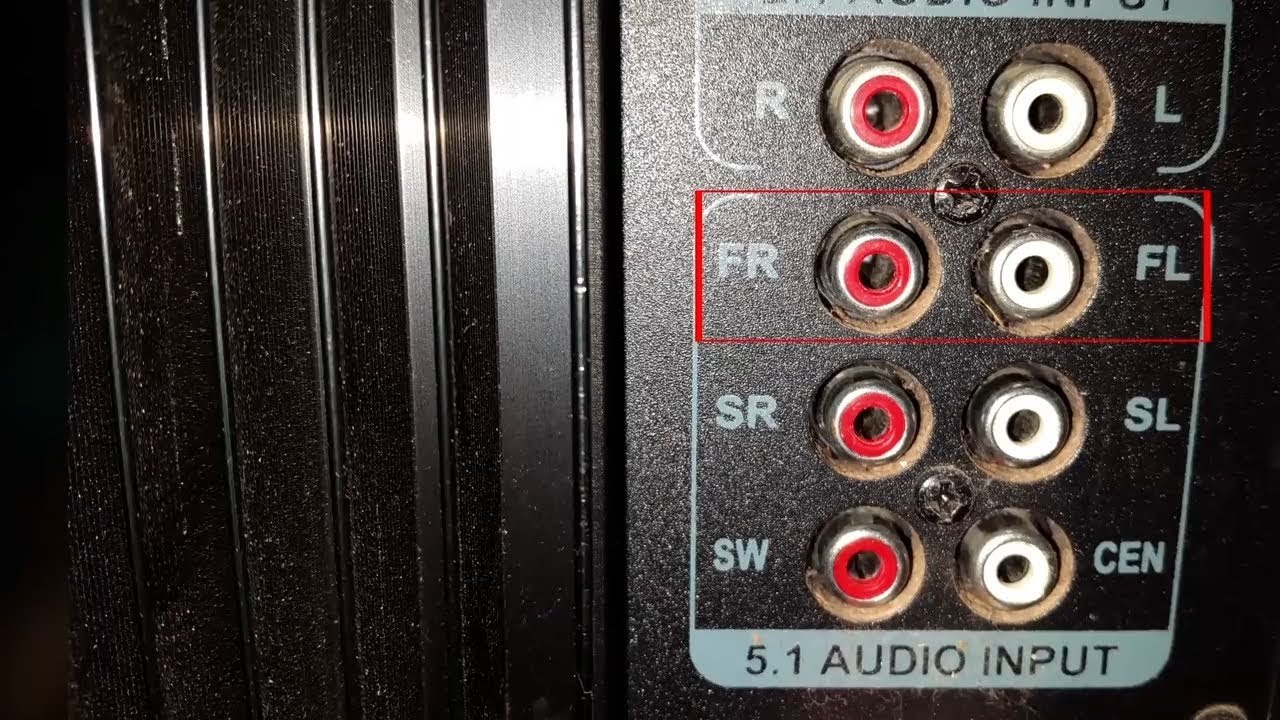
It should be front and center so that it clearly broadcasts to the entire room. If you were to draw lines coming from the speakers, they should meet at ear level in the center of the room. Ideally, you'll choose an entertainment system (e.g., a console) or a Blu-Ray player for your TV; DVD players and VCR boxes are relatively outdated at this point. Some systems are labeled with an “i.” such as 1080i. This stands for “interlaced” pixels, which broadcast slightly differently.
Step 6: Enjoy Your New Home Theater Experience
While you can't expect the same level of sound quality from an all-in-one package as you might expect from individually purchased components, all-in-one home theater systems are perfect for beginners. This wikiHow teaches you how to choose, install, and connect all of the components for a home theater system, including the television, the speaker system, and the receiver. Position the speakers and subwoofer, but be careful not to place them flush against any walls.
Step 1 – take one HDMI cable and connect HDMI OUT port on the cable box to the HDMI IN port on the TV. – take the other HDMI cable and use it to connect the TV to your cable box by inserting one end into the HDMI OUT port on the cable box and the other end into the HDMI IN port on the TV. Apart from the three previously mentioned HTS elements, it is common to have the fourth element which serves as a source – BluRay or DVD player, CD player, gaming console, etc. In our case, the fourth element will be the cable box. Second, please, bear in mind that each speaker is connected to the receiver separately via speaker cable that has two wires on each end. You need to connect the terminals on the backside of your speaker to the terminals on the back of your receiver.
Be sure that you match the cable’s color to the color of the jacks on the converter box. Some soundbars, like this one from VIZIO, include both analog audio and digital audio inputs. There will be one HDMI output on your Blu-ray disc player.
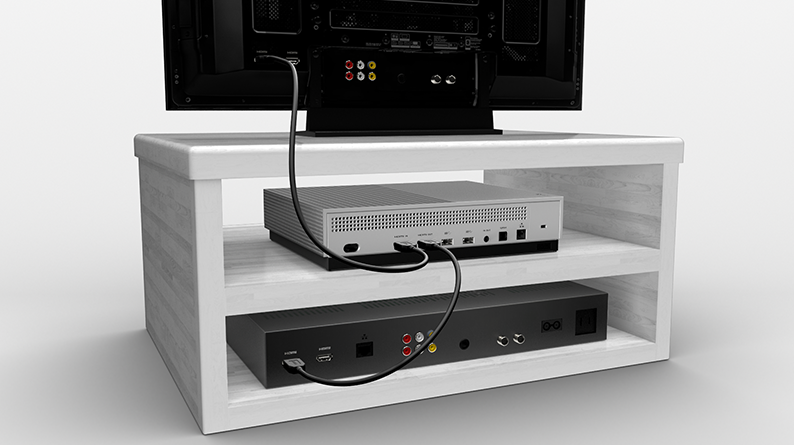
In this case, the wires are color coded for easy access. Having your own home theater means you've got a great display and audio set up going on with your media. If you play games, stream movies, or listen to music on your PC, then connecting your computer to your home theater is highly encouraged. You'll be able to access media content on your computer, but experience that content on a big screen with awesome sound. Your task is to get the audio and video signals from the source components to the sound system and video display, respectively. Optical audio sends the sound signal as a series of light pulses so do your best to not bend the cable or it won't work properly.
In many cases, you will select the "TV" input on your receiver to get sound from the TV over ARC. Many Yamaha receivers, for example, use the "Audio 1" input for ARC sound. Some receivers allow you to assign the ARC audio input to a different named input if you prefer. A home theater receiver, which is also known as a surround-sound receiver or an audiovisual or video receiver, is made to be a central control hub for various audio and visual devices that are connected to it. It has the ability to connect to video devices, but the results are not as good as they are with a home theater receiver. I have an HDMI cable going from the cable box into the TV.
It provides great dynamic sound with wonderful clarity that will help you feel fully immersed in whatever you are watching, especially if you pair it with a great set of surround sound speakers. In your TV’s wireless connection or audio setup section of the menu and click on the Bluetooth option to get your TV and audio system to pair. Optical cables, AKA SPDIF, sound good, but may introduce audio delay to your picture, especially in older systems. There is usually an option to delay audio to sync to video output if this is the case. The easiest and most elemental way to connect your TV to an external audio device, like a home theater receiver, is by using RCA, AKA composite, cables to connect the receiver to the TV’s stereo outputs .
Make sure the location that you choose for your equipment is well ventilated, as overheating is a big problem with powerful amplifiers and A/V receivers. Things should go “out” from the media player and “in” to the TV. Attach the media player directly to the TV , skipping the receiver, to make sure that the media player works. Side facing speakers should be parallel to the viewer, offering sound from the right and left.

A High-Definition Multimedia Interface cable will allow you to transfer uncompressed video data from the devices connected to your home theater receiver to your TV. It is also the cable that you would use to connect any other external device, like a laptop to your TV. It is also a durable and reliable cable and very simple to use. This is the most common type of cable to make a stereo audio connection between components. Connection to send the signal to the TV, you can also make the video connection from the source device directly to the TV.
After connecting the cable to both the TV and the home theater receiver, switch the home theater receiver on and follow the setup instructions of your audio system. When you switch your receiver on, instructions on how to change your TV’s audio output settings should appear on the screen. If nothing happens, you can just go into your TV’s audio settings and change the audio output mode manually.
"Dolby Digital" I don't get audio from the 2 surround speakers. LG.com utilizes responsive design to provide a convenient experience that conforms to your devices screen size. In order to get the best possible experience from our website, please follow below instructions. Now you can hook up TV to a DVD player using AV cable.


No comments:
Post a Comment